
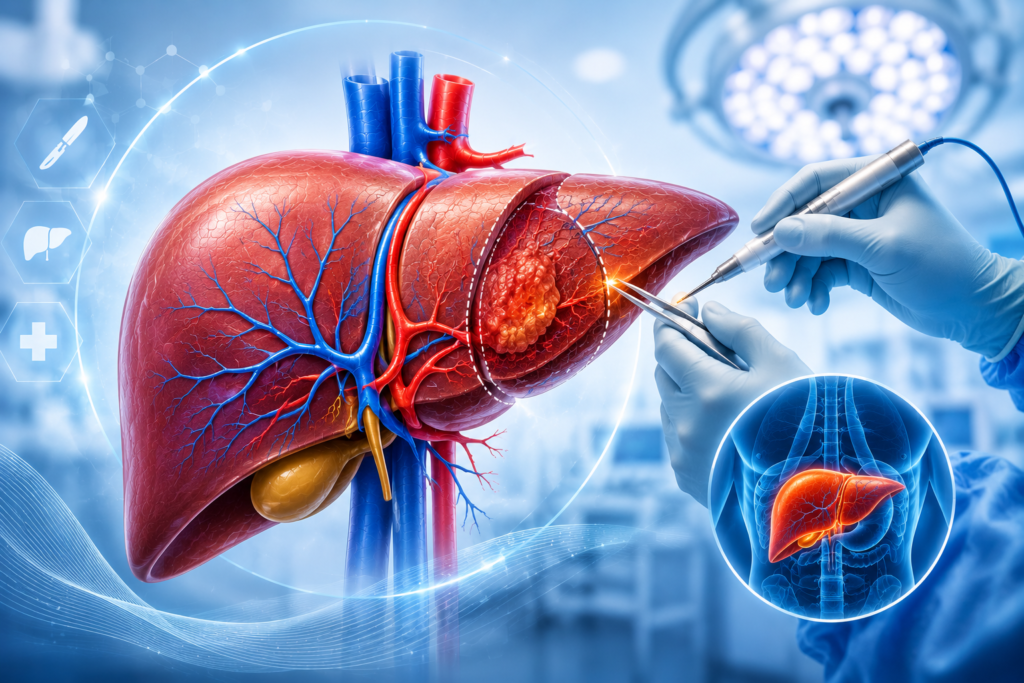
A liver resection, also known as a hepatectomy, is a surgical treatment that involves removing part of your liver. You can have up to two-thirds of your liver removed if the remainder of it is healthy. If you have liver disease, you may only have a tiny portion removed.
A liver resection may be performed to treat liver disease or to give a portion of your liver to a living donor liver transplant. Causes for which a hepatectomy might be necessary: To remove a malignant, precancerous, or benign (noncancerous) tumor, surgeons typically perform a partial liver resection. There are two types of liver cancer: primary and secondary. Primary liver cancer starts in the liver and spreads to other organs.
The most prevalent liver malignancies that are treated with a partial hepatectomy include:
Additional benign lesions include:
Recovery from a liver resection at home often takes four to eight weeks. You may need to take time off from work. You should avoid lifting large objects or performing intense exercises while you are healing. It may take up to 12 weeks before you can resume all of your typical activities. Recovery from laparoscopic or robotic surgery is usually faster. You can recover at home for two to four weeks, but it will take six to eight weeks before you can return to normal activities. Getting adequate protein and engaging in light exercise (such as walking) every day will help speed up your recuperation. Try to walk for at least 30 minutes per day, but take breaks as needed.
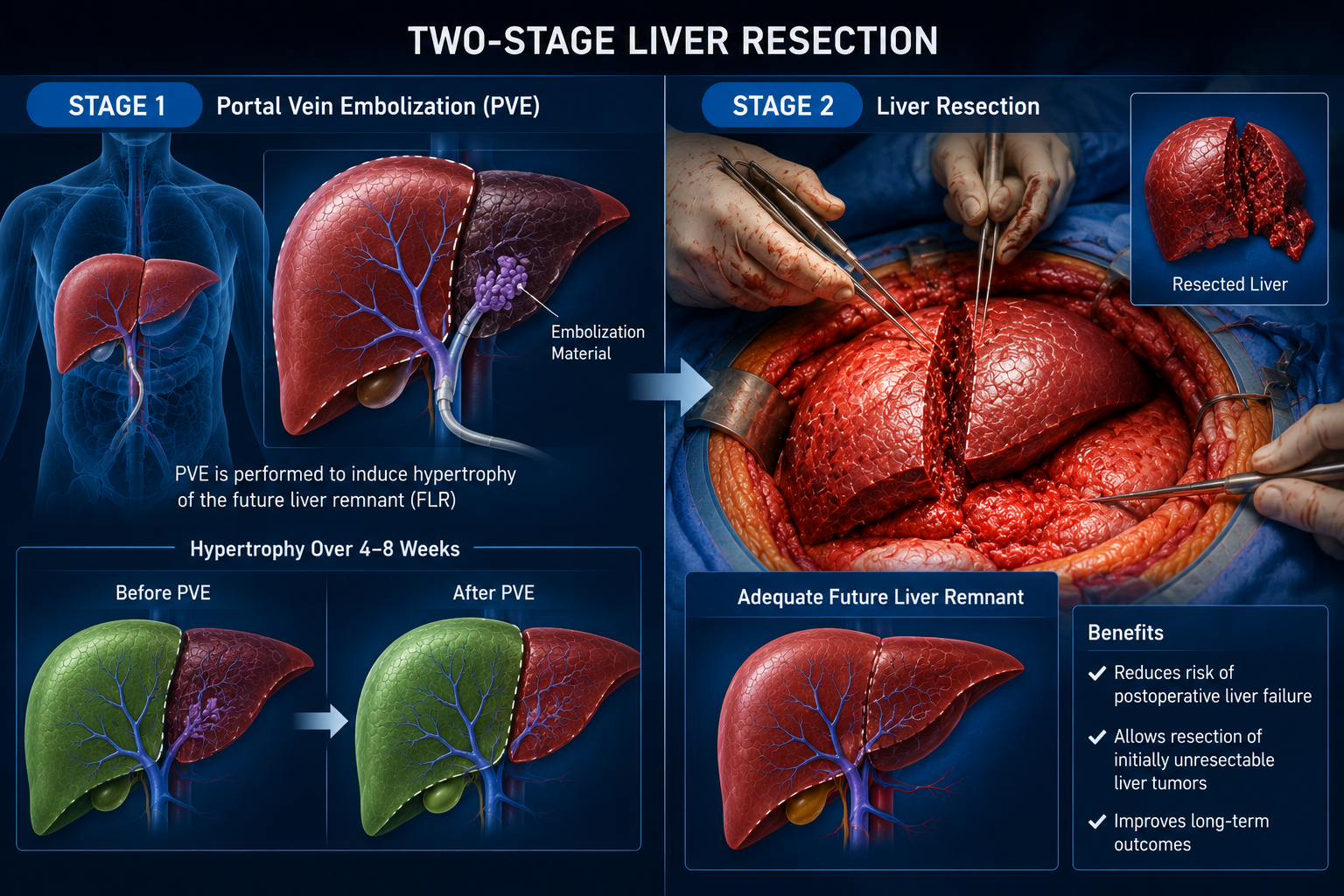
Your healthcare professional will need to decide whether surgery is the best way to address the health problem. This may depend on:
Your healthcare professional will also have to determine if a partial hepatectomy or a liver transplant is required. This may depend on:
Your healthcare practitioner may wish to perform certain tests on you to screen for these factors, such as:
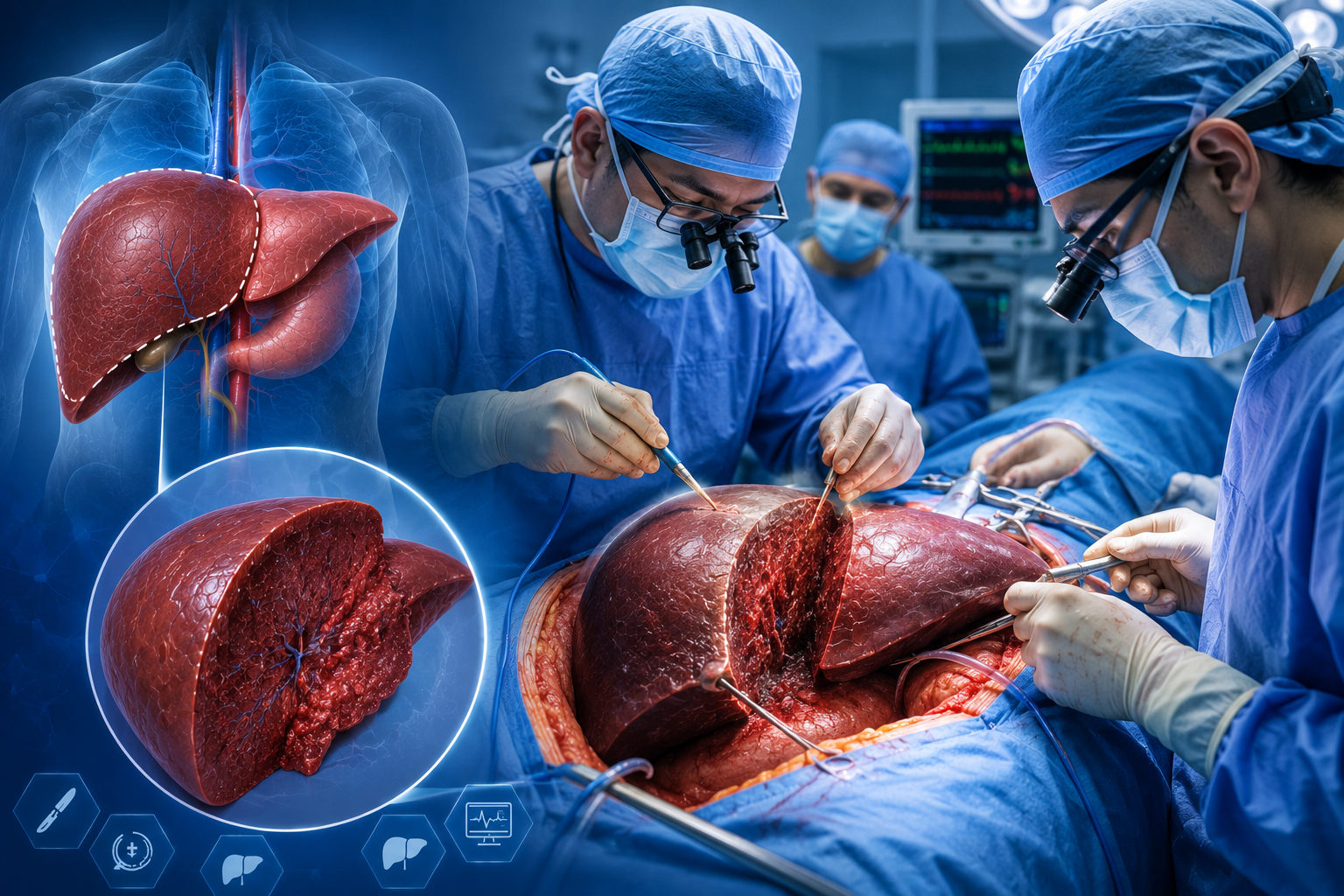
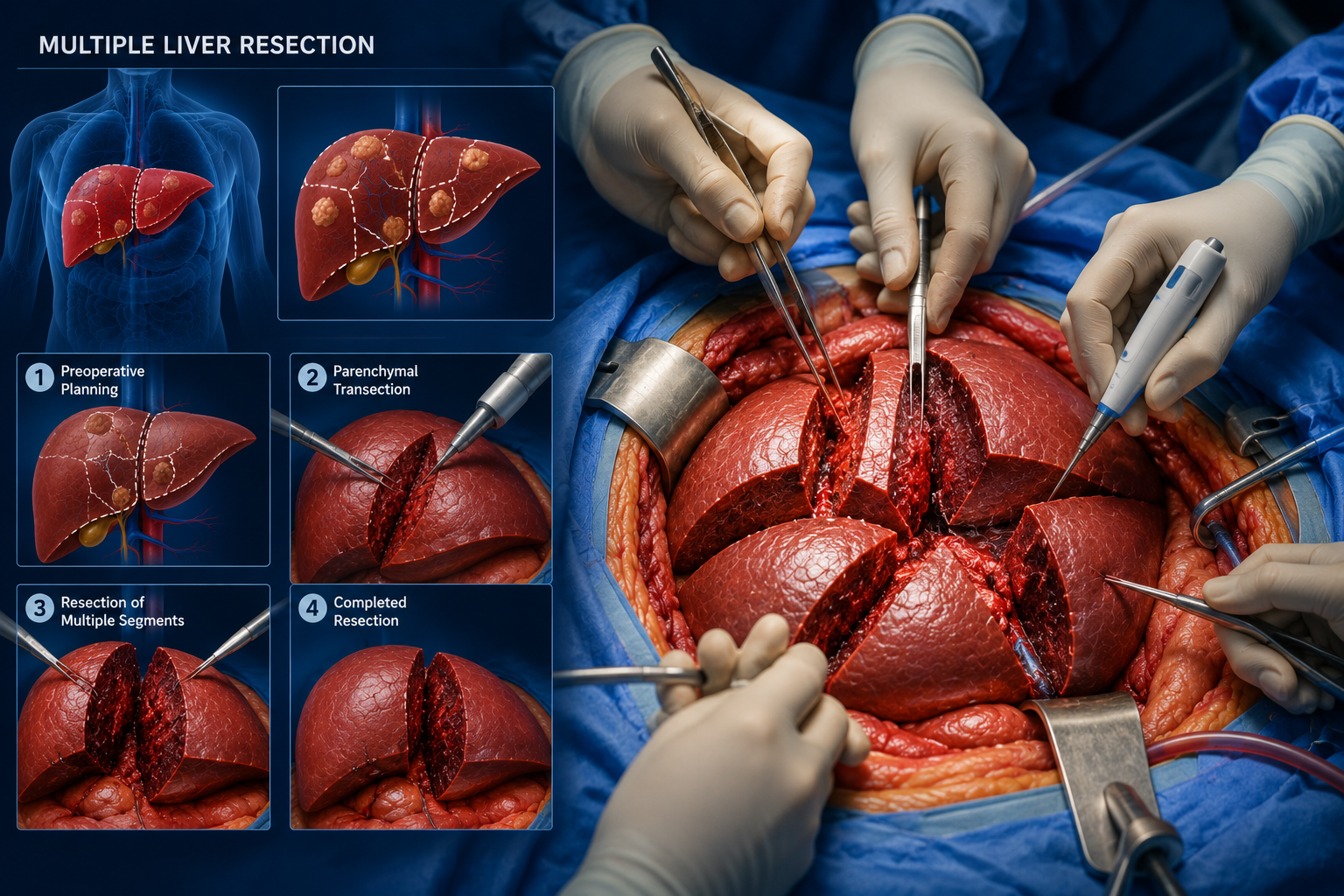
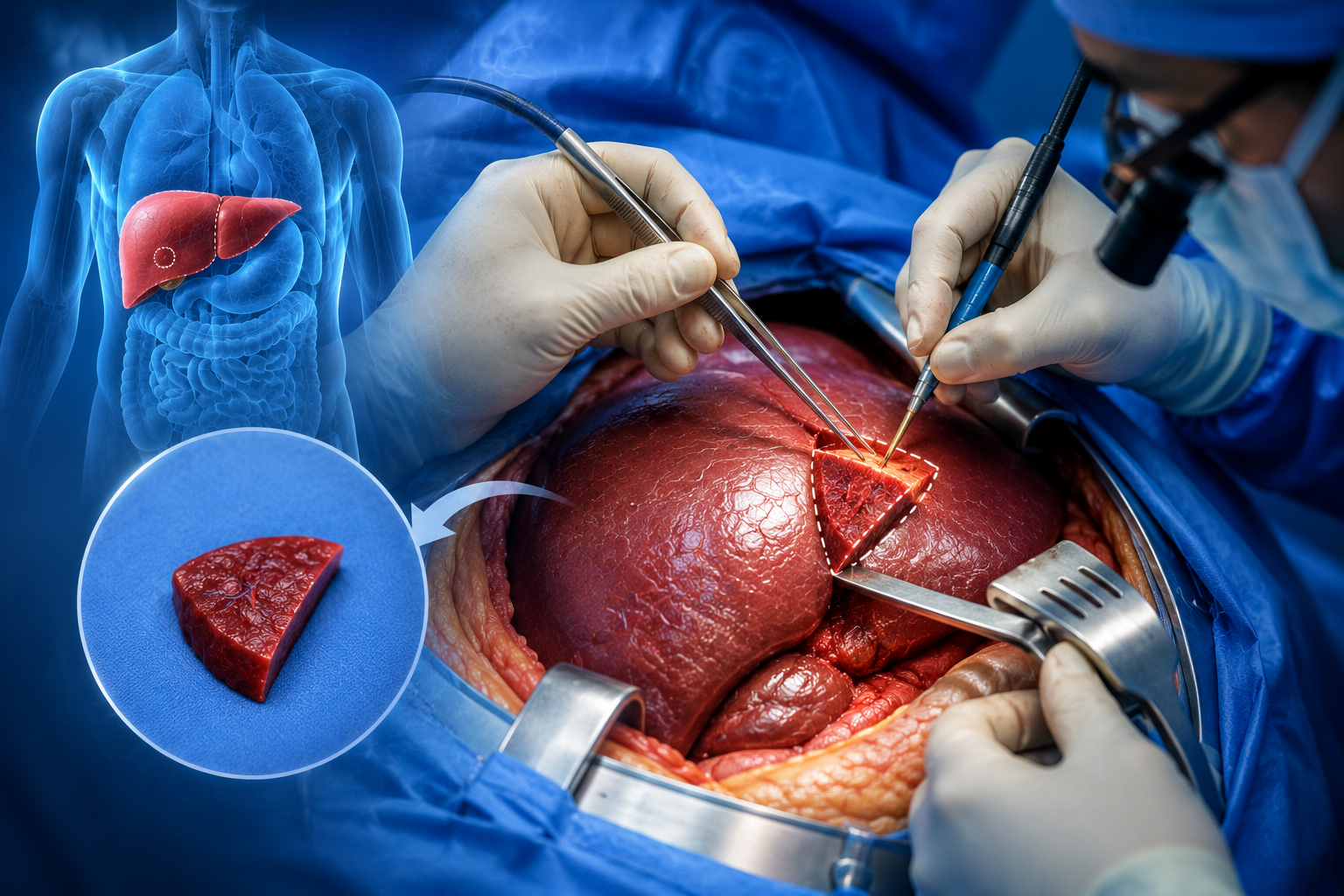
Hepatectomy can be done using open, laparoscopic, or robotic surgery. Your doctor will evaluate the best way to treat your condition. Laparoscopic and robotic procedures are less invasive because they use fewer incisions—typically four to six small incisions, each about a half-inch in size. These tiny incisions allow for a faster recovery. However, standard open surgery may be required to deal with more extensive or complicated liver resections.
A complete liver resection is the surgical removal of all of the liver. A complete liver resection is performed during a transplant to remove a damaged liver. A living donor may potentially contribute a piece of liver tissue obtained through a partial hepatectomy, which can be conducted as a typical open procedure or with less invasive methods.
The purpose of a partial liver resection is to remove the diseased part of your liver (with a safe margin around any cancerous tumor) while leaving enough liver behind to perform all of your liver’s functions. The amount of liver that must be left behind depends on the total damage to the liver. A healthy liver may be capable of losing up to two-thirds of its capacity while still recovering. A severely injured liver may only be able to lose one-third.
The majority of patients will recover in a post-anesthesia ward before being transferred to an inpatient room. In severe surgical procedures, you may need to spend one or two days in critical care after the operation. In intensive care, your healthcare team will continuously monitor your fluid/electrolyte balance, blood glucose levels, and blood loss. They will treat you for any abnormalities that arise. Once stable, you will spend up to a week in the hospital recovering. You’ll eventually resume eating solid foods and start moving about more, and the doctor will remove the tubes. After discharge, you will book a follow-up appointment with liver transplant surgeon in two weeks to review your final pathology report and discuss how your recovery is going.
A: Nerves were cut, therefore the skin around the incision may be numb. This is typical and may improve over time. However, you may always experience some numbness where the incision was created. You can require 4 to 8 weeks to fully heal.
A: Liver resection is a technically challenging surgery due to the numerous vessels and potential bleeding. It’s less risky for smaller resections using minimally-invasive techniques like laparoscopic or robotic surgery, but more dangerous for major resections. It’s recommended to have it with experienced specialists.
A: Your liver has the amazing ability to repair and regenerate itself. It wants to go back to a regular size that fits your body type as a whole. When liver cells detect damage, they communicate with one another and begin dividing and replicating until the required size is reached. This process relies on healthy liver tissue, and some livers may take longer to repair or return to their original size.
A: The liver is an essential organ that helps to sustain life. It removes pollutants, converts nutrition, and stores vitamins and energy. It is impossible to live without a functional liver. This means that, while some people can live with liver illness, others who have liver failure need a transplant.
Copyright © 2026 Dr. Amol Jadhav All rights reserved