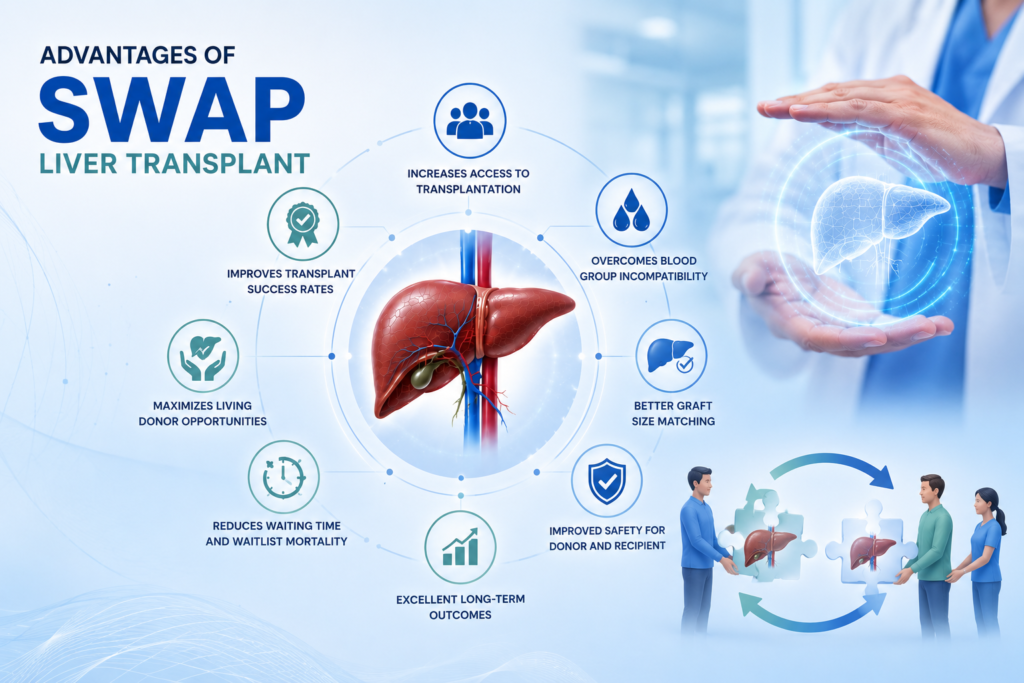
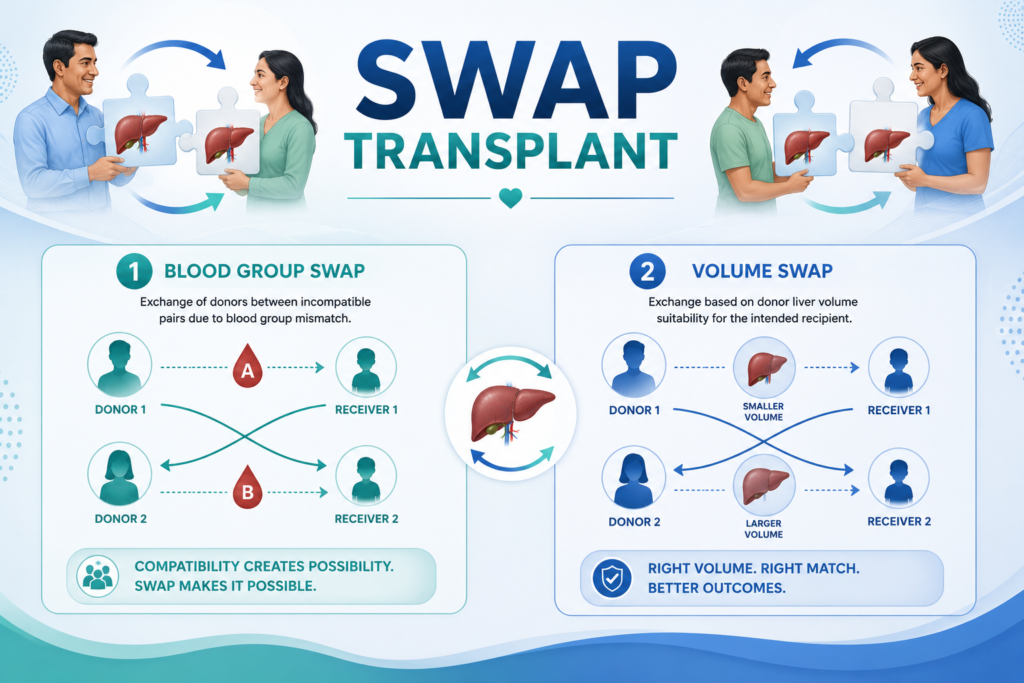
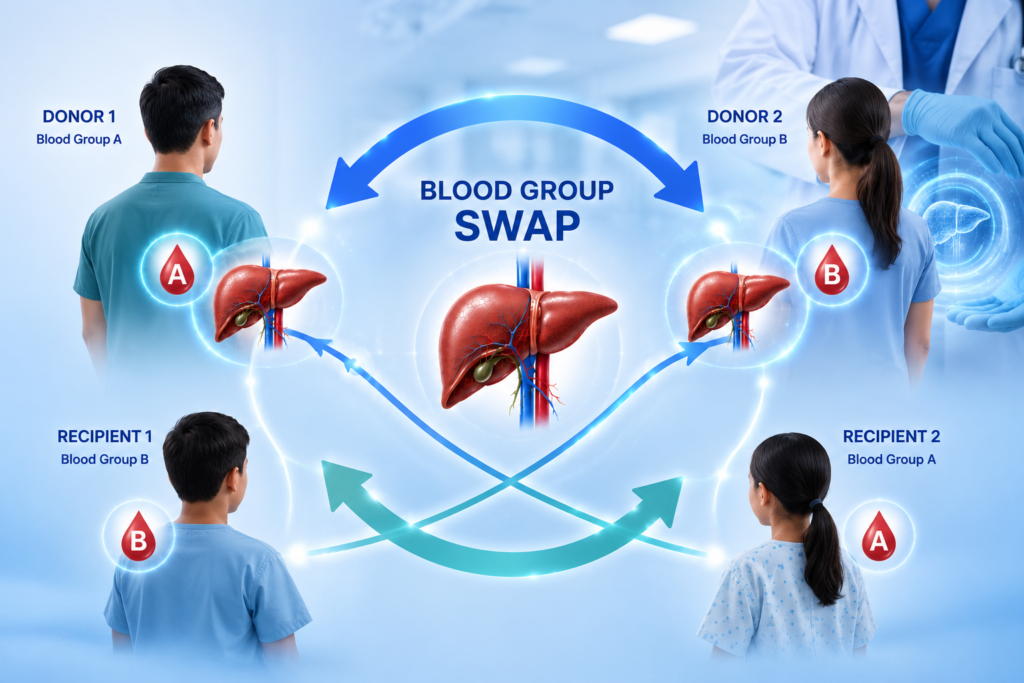
SWAP Liver Transplant is an advanced living donor liver transplantation strategy designed for patients who cannot undergo a direct living donor transplant due to blood group incompatibility or inadequate donor liver volume. In a SWAP transplant, two or more donor-recipient pairs exchange donors, allowing each recipient to receive a compatible and suitable liver graft.
This innovative approach increases transplant opportunities and helps patients receive timely treatment without waiting for a deceased donor organ.
A Split Liver Transplant involves dividing a deceased donor liver into two portions. One portion is transplanted into a child while the remaining portion is used for another recipient, usually an adult.This approach helps maximize donor organ utilization while providing life-saving treatment to children awaiting transplantation.
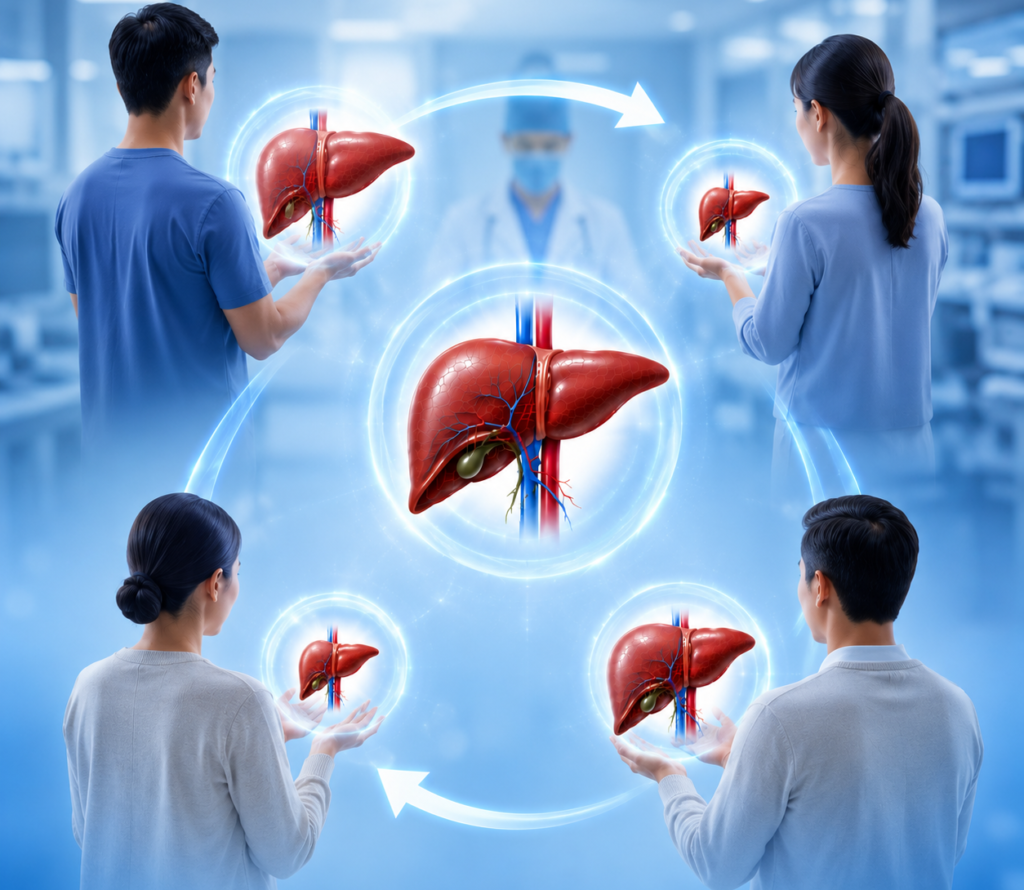
A Split Liver Transplant involves dividing a deceased donor liver into two portions. One portion is transplanted into a child while the remaining portion is used for another recipient, usually an adult.This approach helps maximize donor organ utilization while providing life-saving treatment to children awaiting transplantation.
Both donor-recipient pairs undergo detailed medical evaluation
Blood groups, liver volume, anatomy, and overall suitability are assessed.
Compatible donor-recipient combinations are identified between participating pairs.
A multidisciplinary transplant team plans the procedures to ensure donor safety and successful transplantation.
The donor and recipient surgeries are coordinated and performed according to established transplant protocols.
A SWAP transplant is considered when:
Yes. SWAP transplantation follows the same safety protocols and surgical standards as conventional living donor liver transplantation, with comprehensive evaluation of all donors and recipients.
Patients with a willing but incompatible donor due to blood group mismatch or liver volume mismatch may be considered for a SWAP transplant program.
Yes. A willing family donor may participate in a SWAP arrangement if direct donation is not possible due to incompatibility.
Copyright © 2026 Dr. Amol Jadhav All rights reserved