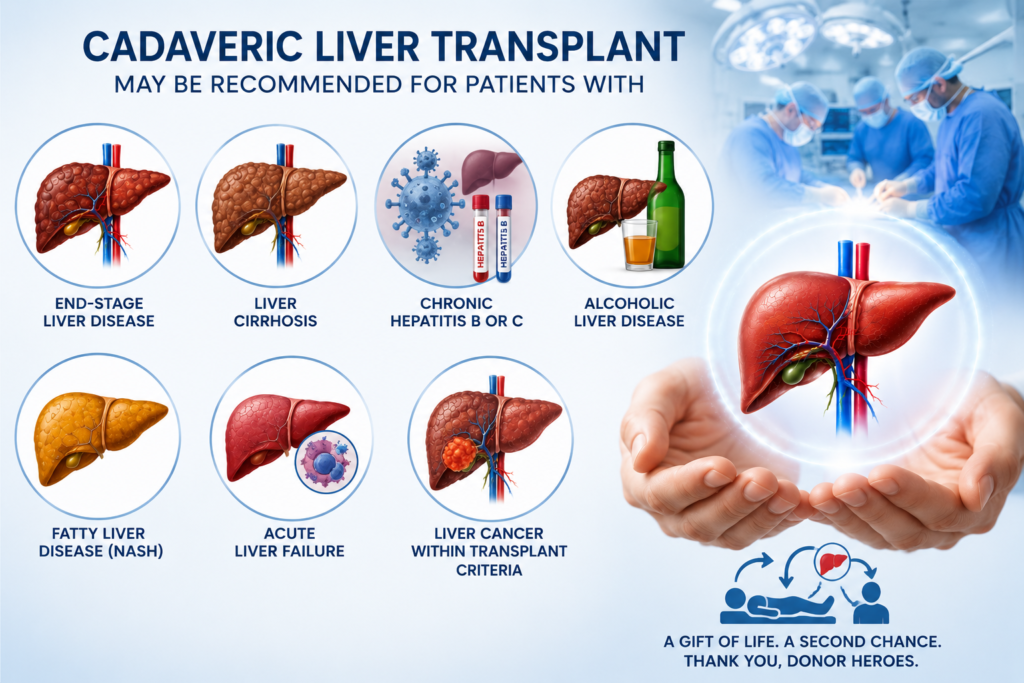

Cadaveric Liver Transplant, also known as Deceased Donor Liver Transplant (DDLT), is a life-saving procedure in which a healthy liver from a brain-dead donor is transplanted into a patient suffering from end-stage liver disease or acute liver failure. Organ donation from deceased donors offers hope to patients who do not have a suitable living donor and require urgent transplantation.
With advances in transplant surgery, organ preservation techniques, and post-transplant care, Cadaveric Liver Transplant has become a highly successful treatment option with excellent long-term outcomes.
Cadaveric Liver Transplant is a procedure where the liver is obtained from a deceased donor who has been declared brain dead but whose organs remain healthy and functional. The donated liver is carefully matched with a recipient based on blood group, medical urgency, body size, and other transplant criteria.
The transplant surgery involves removing the diseased liver and replacing it with the healthy donor liver, restoring normal liver function and improving survival.
The transplant team conducts a detailed evaluation of:
Comprehensive blood tests are performed to assess:
The Model for End-Stage Liver Disease (MELD) Score is used to determine the severity of liver disease and prioritize patients on the deceased donor waiting list.
Key parameters evaluated include:
Once the evaluation is completed and transplantation is recommended, eligible patients are registered on the deceased donor liver transplant waiting list according to national organ allocation guidelines and medical priority.
The transplant board reviews all findings to determine:
Yes. With experienced transplant teams, advanced surgical techniques, and modern post-transplant care, DDLT is a well-established and highly successful procedure.
The transplant team immediately contacts the patient. The patient is admitted to the hospital, undergoes final assessments, and is prepared for transplant surgery.
Most patients remain in the hospital for 1 to 3 weeks. Full recovery and return to routine activities generally occur over the following few months.
Patients with worsening liver disease, recurrent complications, liver cancer, or acute liver failure should seek early evaluation by a liver transplant specialist to discuss transplantation options and eligibility.
Copyright © 2026 Dr. Amol Jadhav All rights reserved