Pre-Transplant Care (Optimization)
Pre-transplant optimization is a critical phase in preparing patients for liver transplantation. Our multidisciplinary team of liver transplant surgeons, hepatologists, intensivists, nephrologists, nutritionists, physiotherapists, and transplant coordinators work together to ensure patients are in the best possible condition before surgery.

Pre-transplant optimization is a critical phase in preparing patients for liver transplantation. Our multidisciplinary team of liver transplant surgeons, hepatologists, intensivists, nephrologists, nutritionists, physiotherapists, and transplant coordinators work together to ensure patients are in the best possible condition before surgery.
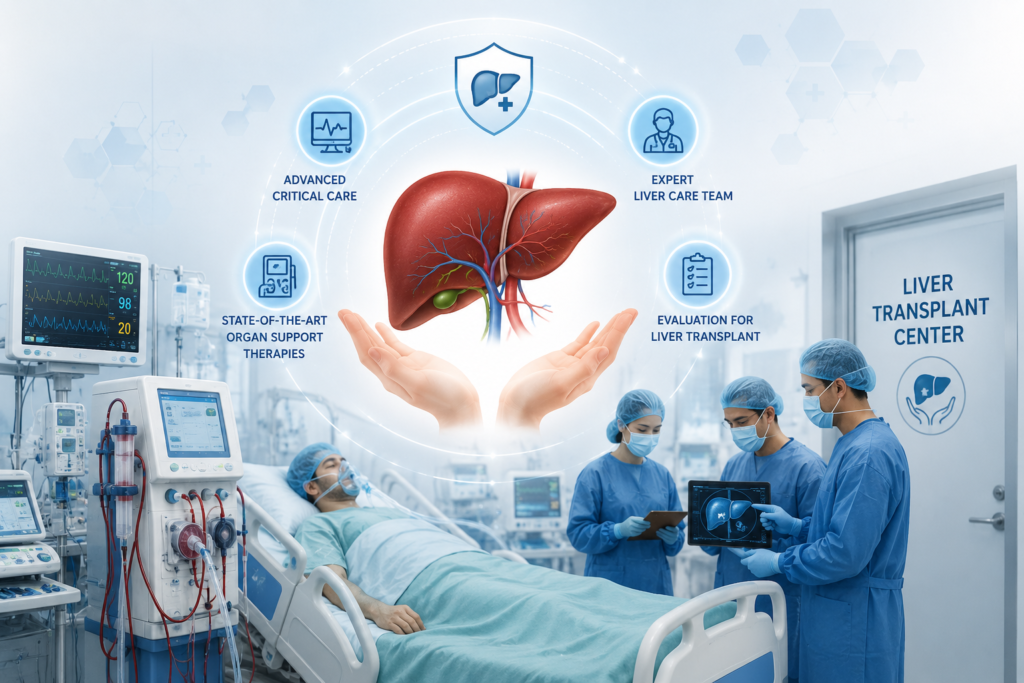
Patients with advanced liver disease often require intensive monitoring and organ support before transplantation. Our specialized ICU team provides:
Patients admitted to the ward undergo structured optimization programs designed to improve their physical, nutritional, and psychological health.
Every patient undergoes a detailed fitness assessment to evaluate overall suitability for liver transplantation. This includes nutritional status, cardiovascular fitness, respiratory function, physical conditioning, and psychological readiness. The goal is to minimize surgical risks and improve post-transplant outcomes.
Acute Liver Failure is a life-threatening condition that requires immediate specialist care. Our advanced liver critical care team provides comprehensive management using state-of-the-art organ support therapies while evaluating patients for potential liver transplantation.
Plasma Exchange (PLEX)
Plasma Exchange helps remove toxins, inflammatory mediators, and harmful substances from the bloodstream while replacing deficient plasma components. It can provide crucial support in patients with acute liver failure.
Continuous Renal Replacement Therapy (CRRT)
CRRT is a specialized form of dialysis used in critically ill patients with kidney dysfunction. It provides continuous fluid and toxin removal while maintaining hemodynamic stability.
SLED Dialysis (Sustained Low-Efficiency Dialysis)
SLED combines the advantages of conventional dialysis and continuous therapies, offering effective toxin removal with better cardiovascular tolerance in critically ill patients.
Cytosorb Therapy
Cytosorb is an advanced blood purification technology designed to remove inflammatory mediators and toxins from the bloodstream. It helps control systemic inflammation and supports recovery in selected patients with severe liver failure.
Our goal is to stabilize patients, support failing organs, prevent complications, and provide timely access to liver transplantation when required.
A: Steer clear of excess salt, sugar, and saturated fats. In particular, diabetes management requires a low-sugar diet. Maintaining a diet low in saturated fat will assist in controlling your cholesterol levels. Your transplant team will provide you with information regarding your diet.
A: The age restriction depends upon the overall health status of each patient. It is uncommon, though, to offer a liver transplant to a patient older than 70.
A: Donors need to have liver anatomy that is appropriate for donation and a compatible blood type. A major medical condition, such as liver disease, diabetes, heart disease, or cancer, cannot be a potential liver donor. You must be a willing adult between the ages of 18 and 60 in order to donate your liver.
Copyright © 2026 Dr. Amol Jadhav All rights reserved