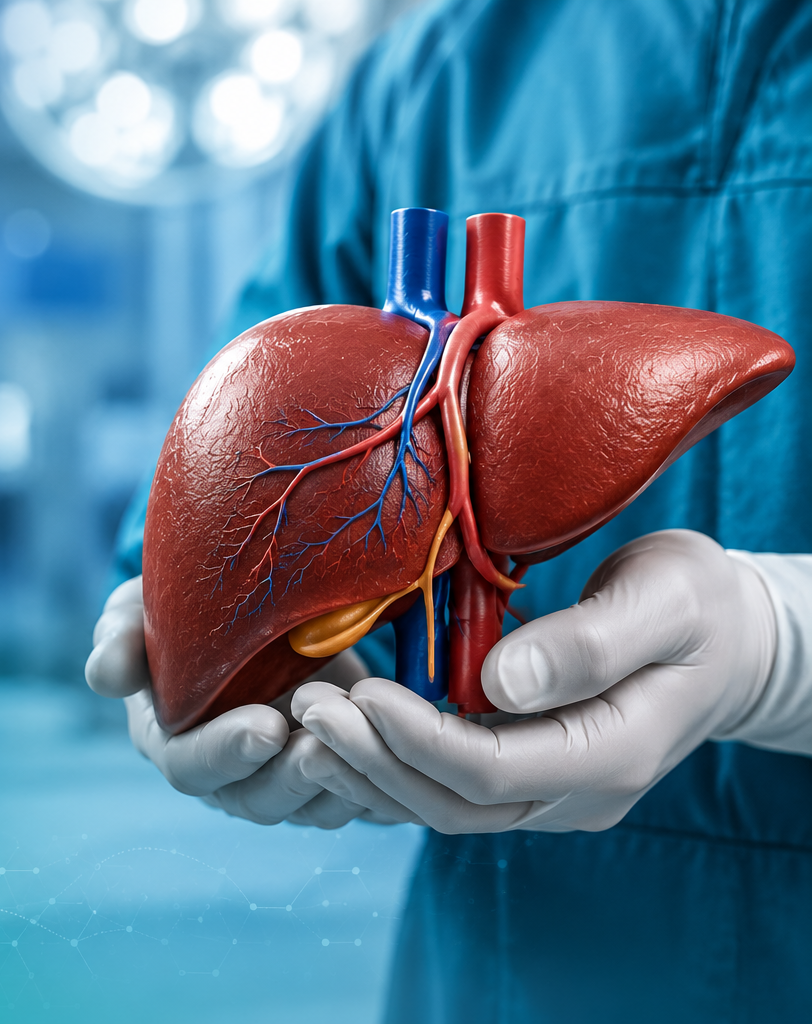
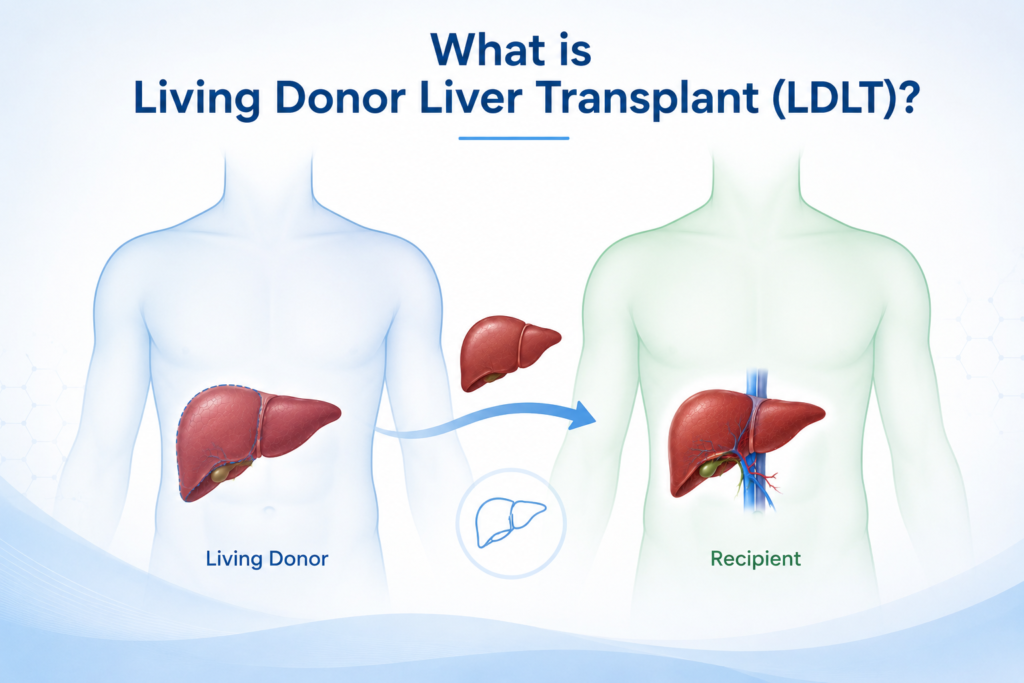
Living Donor Liver Transplant (LDLT) is a specialized surgical procedure in which a healthy individual donates a portion of their liver to a patient with advanced liver disease. Since the liver has a remarkable ability to regenerate, both the donor’s remaining liver and the transplanted portion can grow back to near-normal size over time.
LDLT offers patients a timely transplant option, reducing waiting times and improving outcomes, especially in regions where deceased donor organs are limited.
Living Donor Liver Transplant involves transplanting a portion of a healthy donor’s liver into a recipient whose liver is failing or severely damaged. The donor is usually a close family member or a medically suitable individual who meets strict health and safety criteria.
Following surgery, both the donor’s and recipient’s livers regenerate, restoring normal liver function.
A carefully planned portion of the donor’s liver is surgically removed while ensuring maximum donor safety.
The diseased liver is removed and replaced with the donated liver segment. Blood vessels and bile ducts are reconstructed to restore normal liver function.
The recipient undergoes a detailed assessment to determine the severity of liver disease and suitability for transplantation.
After completing all investigations, a multidisciplinary transplant team reviews both donor and recipient evaluations to determine:
A living liver donor is usually a healthy adult between 18 and 55 years of age with a compatible blood group, normal liver function, and no major medical conditions.
Yes. Living liver donation is generally safe when performed after a thorough medical evaluation. The liver has the unique ability to regenerate, allowing donors to return to normal lives after recovery.
Copyright © 2026 Dr. Amol Jadhav All rights reserved