Paediatric Liver Transplant is a highly specialized surgical procedure performed in infants, children, and adolescents suffering from severe liver disease, liver failure, metabolic disorders, or congenital liver conditions. The procedure involves replacing a diseased liver with a healthy donor liver, enabling the child to lead a healthier and more active life.
Our multidisciplinary paediatric transplant team provides comprehensive care, from diagnosis and evaluation to transplantation and long-term follow-up.
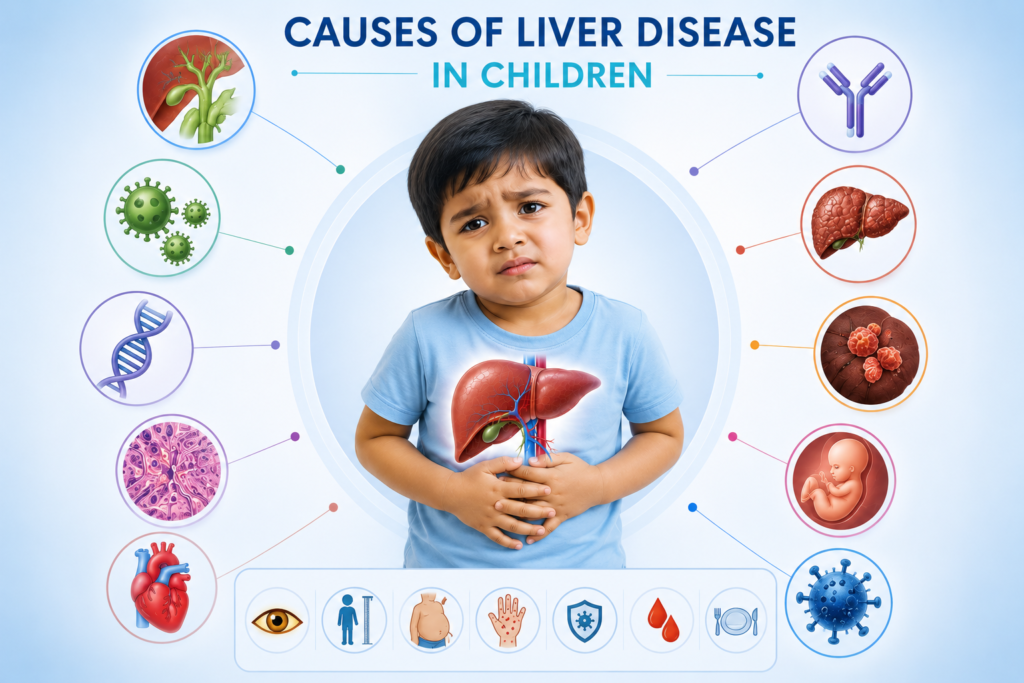
The most common reason for liver transplantation in children. The bile ducts are absent or blocked, causing progressive liver damage.
Sudden and severe loss of liver function due to infections, medications, toxins, or unknown causes.
Inherited conditions that affect how the body processes nutrients and substances, including:
Wilson’s Disease
Tyrosinemia
Glycogen Storage Disorders
Alpha-1 Antitrypsin Deficiency
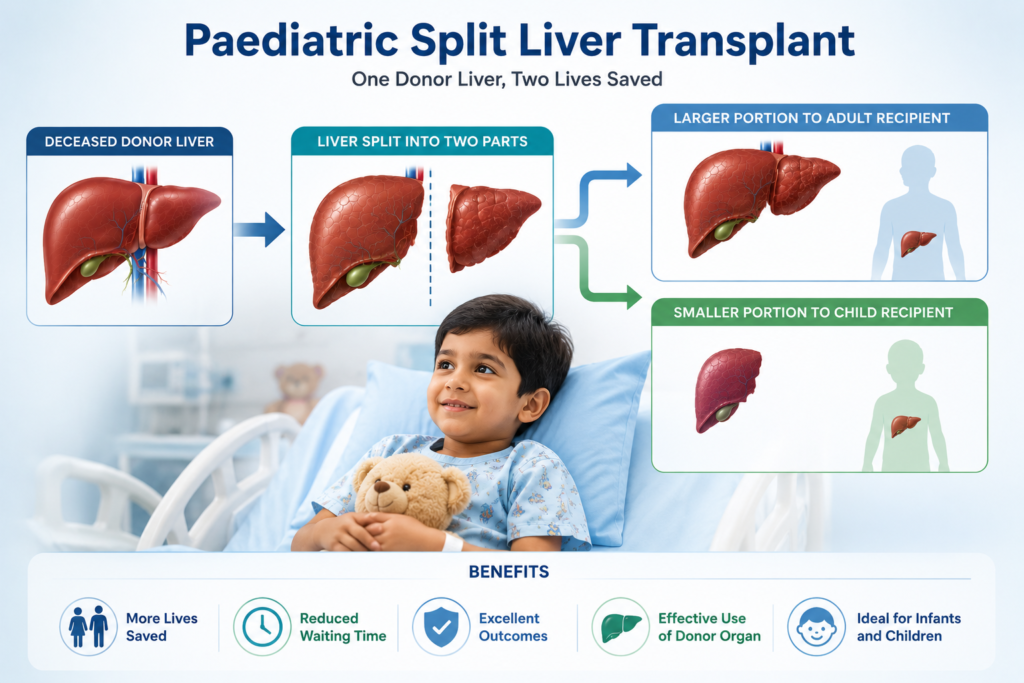
A Split Liver Transplant involves dividing a deceased donor liver into two portions. One portion is transplanted into a child while the remaining portion is used for another recipient, usually an adult.This approach helps maximize donor organ utilization while providing life-saving treatment to children awaiting transplantation.
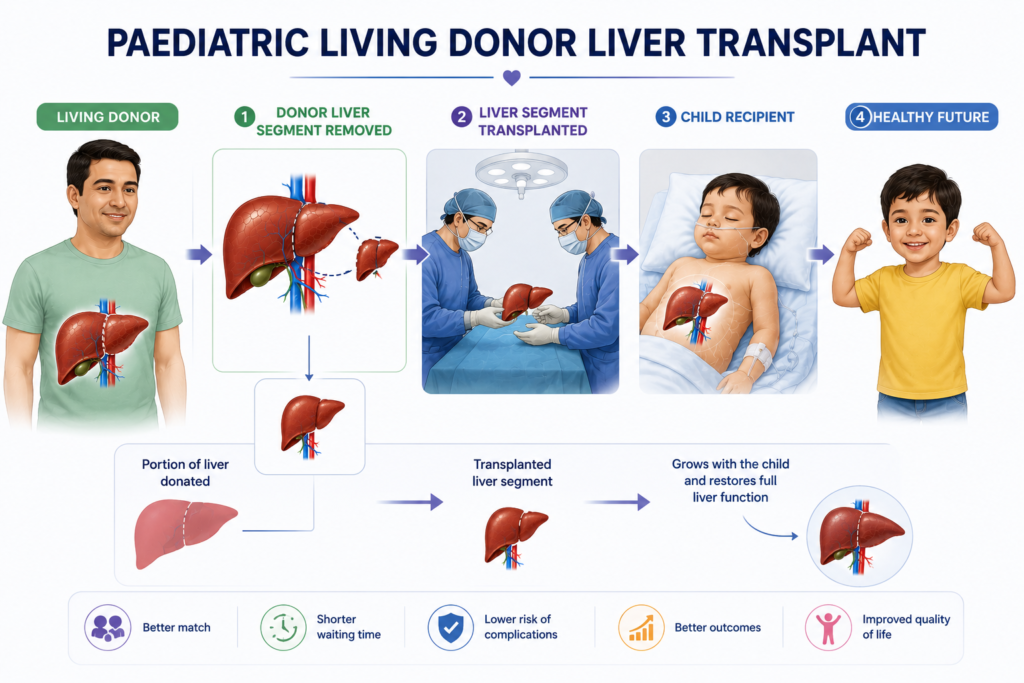
In this procedure, a healthy living donor—usually a parent or close relative—donates a portion of their liver to the child. Since the liver can regenerate, both donor and recipient livers grow back to near-normal size after surgery.
This is one of the most commonly performed paediatric liver transplant procedures.
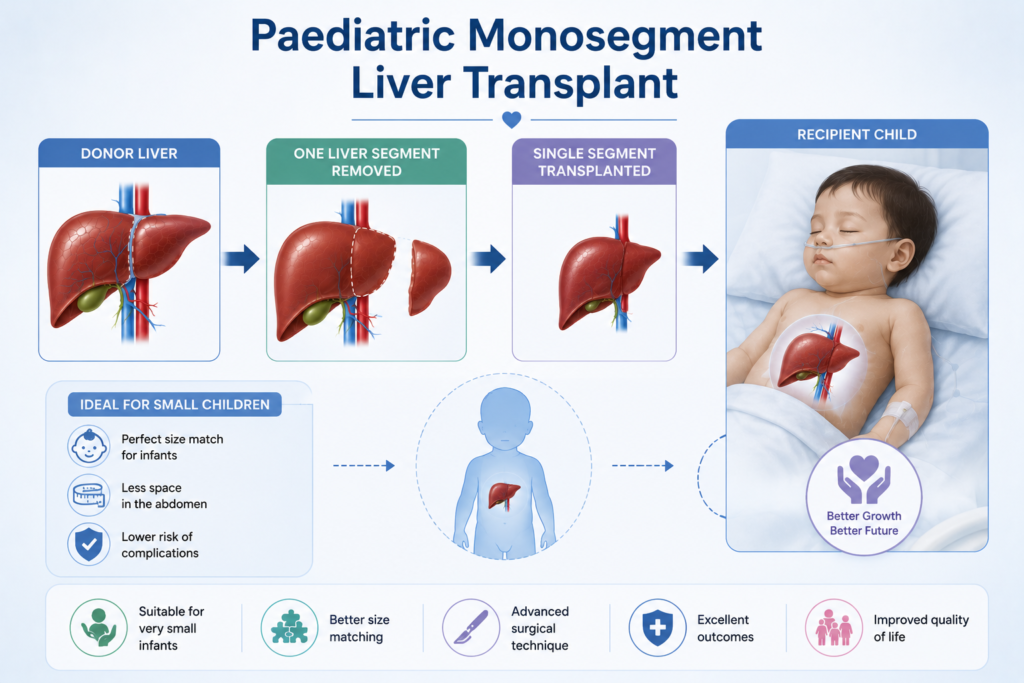
Monosegment Liver Transplant is an advanced transplant technique used primarily for very small infants and newborns. Only a single liver segment from a donor is transplanted, ensuring the graft size is appropriate for the child’s body.
This highly specialized procedure is performed in selected cases where conventional grafts may be too large.
A liver transplant may be recommended for children with:
Biliary Atresia
Acute Liver Failure
Metabolic Liver Disorders
Wilson’s Disease
Progressive Familial Intrahepatic Cholestasis (PFIC)
Alagille Syndrome
Autoimmune Liver Disease
Liver Tumors
Chronic Liver Failure
Congenital Liver Disorders
Persistent jaundice
Poor growth and weight gain
Abdominal swelling
Recurrent infections
Severe itching
Easy bruising or bleeding
Feeding difficulties
Developmental delays
Liver failure complications
Restores normal liver function
Improves growth and development
Enhances quality of life
Improves nutrition and energy levels
Prevents complications of liver failure
Offers long-term survival and healthy childhood development
Comprehensive evaluation includes:
Paediatric hepatology assessment
Liver function tests
Blood group compatibility testing
Ultrasound and Doppler studies
CT Scan and MRI
Cardiac evaluation
Nutritional assessment
Infection screening
Donor evaluation when applicable
A donor is usually:
Living donor transplantation offers:
Yes. The liver has a unique ability to regenerate. Both the donor’s remaining liver and the transplanted liver segment grow over time and regain normal function.
With modern surgical techniques and experienced transplant teams, paediatric living donor liver transplantation has excellent success rates and long-term outcomes.
Copyright © 2026 Dr. Amol Jadhav All rights reserved