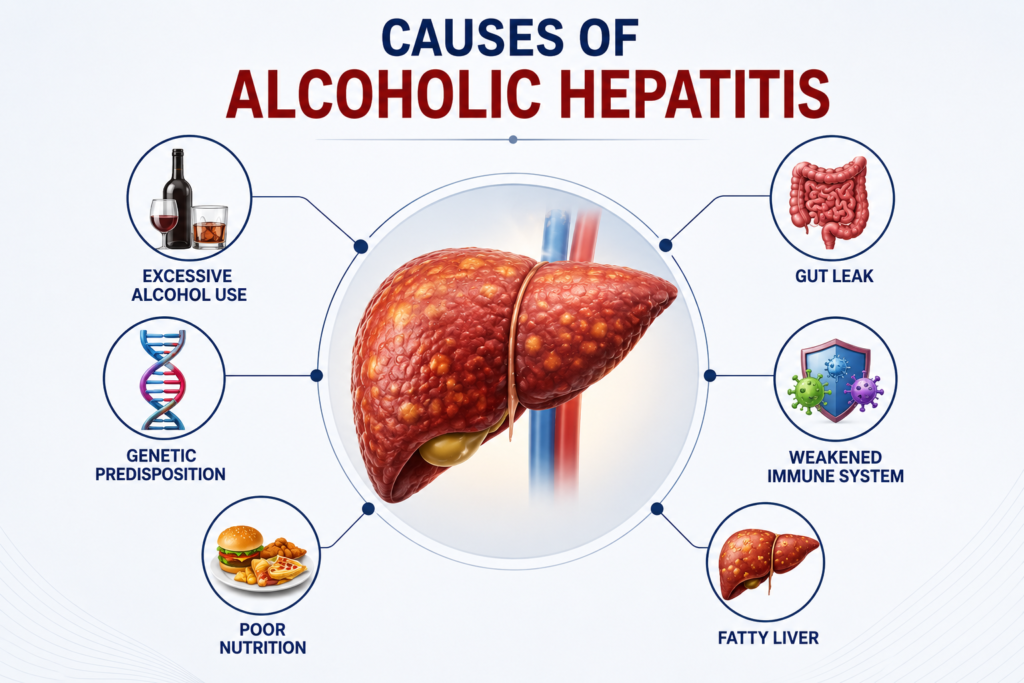

Alcoholic hepatitis is characterized by liver cell inflammation due to excessive and persistent alcohol abuse. It is an indication of tissue damage or infection caused by viruses, toxins, or excessive alcohol. The condition may only be a transient reaction to overindulgence. However, if alcohol-induced hepatitis progresses to a chronic state, your liver may sustain irreversible damage.
Your liver processes every food and beverage that you eat or drink. Your liver aids in the digestion of food and the removal of harmful substances. Alcohol becomes toxic when it is processed by your liver. It disintegrates it into toxic chemicals instead of providing any nutritional value.
Alcohol use disorder or heavy, chronic drinking can overload your liver with toxins and fat for processing. These toxins and fat accumulate and cause liver damage when your liver is unable to cope. There is an inflammatory reaction to the injury. This is your body’s attempt to repair itself and prevent more damage.
Alcoholic hepatitis is primarily caused by heavy drinking over an extended period of time. Inflammation brought on by the liver’s breakdown of alcohol has the potential to kill liver cells. The body gradually starts to replace healthy liver tissue with scars. This interferes with the liver’s functions. Cirrhosis, or irreversible scarring, is the last stage of alcohol-related liver disease. Once cirrhosis develops, liver failure can occur rapidly. An injured liver may also obstruct the kidneys’ ability to receive blood. Kidney damage and failure may follow from this.
Alcoholic hepatitis can be caused by other factors as well. For instance, the risk is higher in those with other forms of hepatitis. It is therefore not advised that they consume alcohol. Malnutrition is another complication of alcoholic hepatitis. Consuming large quantities of alcohol can cause appetite suppression. A person’s primary source of calories may start to come from alcohol. Therefore, liver disease can also be exacerbated by malnutrition.
Comprehensive Fitness Evaluation
Every patient undergoes a detailed fitness assessment to evaluate overall suitability for liver transplantation. This includes nutritional status, cardiovascular fitness, respiratory function, physical conditioning, and psychological readiness. The goal is to minimize surgical risks and improve post-transplant outcomes.
Acute Liver Failure Management
Acute Liver Failure is a life-threatening condition that requires immediate specialist care. Our advanced liver critical care team provides comprehensive management using state-of-the-art organ support therapies while evaluating patients for potential liver transplantation
A: Liver scarring is irreversible. However, the liver can frequently reverse some of the effects of alcohol so that you can lead a normal life. You might receive outpatient care or be admitted to the hospital. Alcohol-related hepatitis cannot be cured with medication.
A: While complete alcohol cessation is often effective in treating mild to moderate forms of acute alcoholic hepatitis. But patients with severe acute alcoholic hepatitis have a poor prognosis.
A: If alcohol consumption persists, alcoholic hepatitis typically develops into cirrhosis. Hepatitis returns to normal in a few months for those who stop drinking, but the cirrhosis that has already set in does not go away.
A: The first phase is characterized by the buildup of fat within the liver cells, which is also referred to as fatty liver or steatosis. Alcohol use can occasionally result in alcoholic hepatitis if it continues past this point.
A: Alcohol consumption may result in hepatitis or liver edema and inflammation. This can eventually result in liver cirrhosis, the last stage of alcoholic liver disease. The cirrhosis results in irreversible damage.
Copyright © 2026 Dr. Amol Jadhav All rights reserved